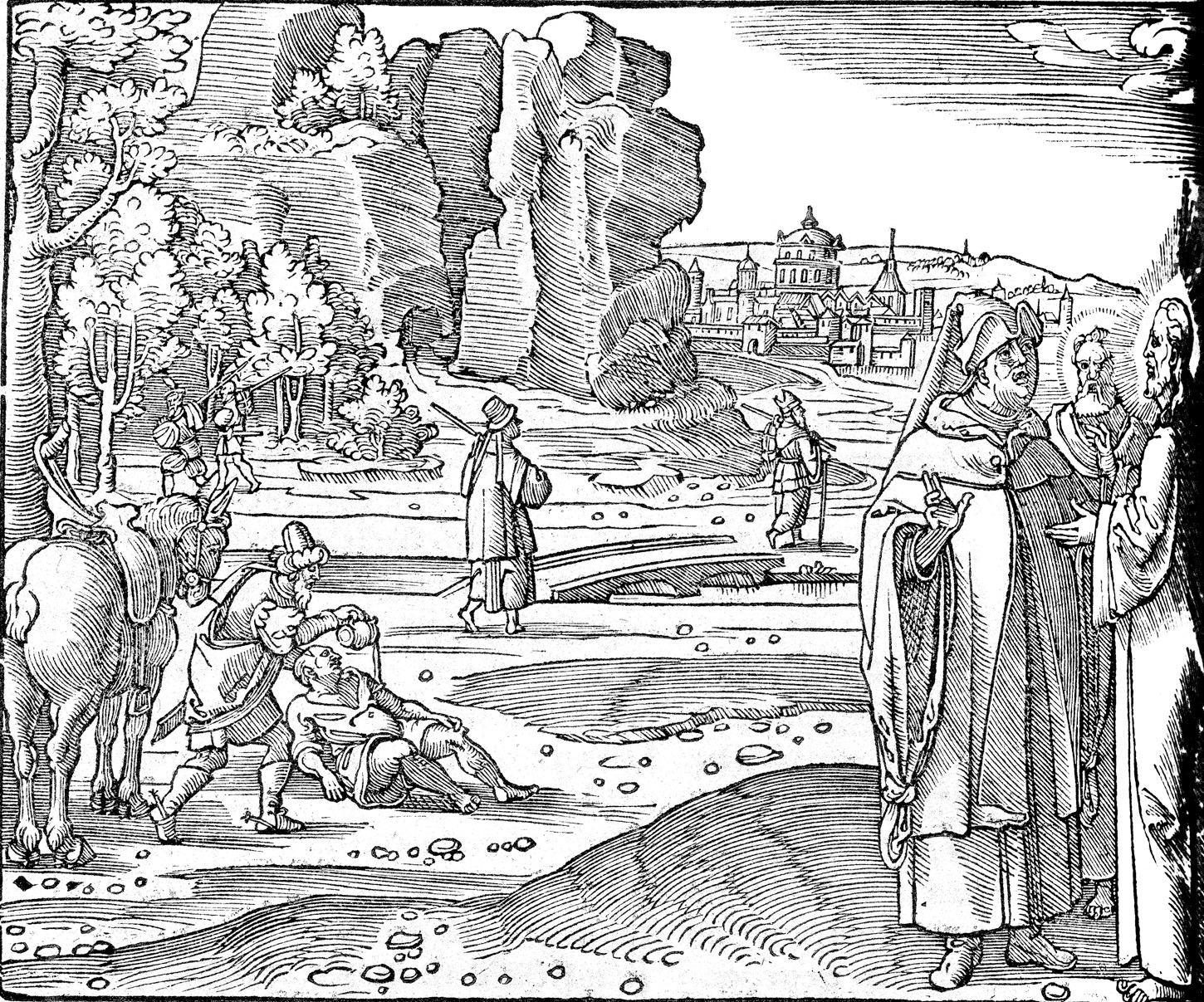
Jesus is a good neighbor for you
Scripture: Luke 10:23–37
Jesus is a good neighbor for you
Scripture Lessons
2 Chronicles 28:8-15
Psalm 32
Galatians 3:15-22
Luke 10:23-37
Grace to you and peace from God our Father and the Lord Jesus Christ.
Our gospel lesson today is called, “the parable of the good Samaritan.” Although it is a story that serves as a parable, it could also have been a true historical event. This is not specified, but we should keep the possibility open.
Anyhow, “The Good Samaritan,” is a familiar passage to all of you, I’m sure. You have heard it before. And may I ask, since you’ve heard this many times, what is the take-away from this story of the Good Samaritan? You don’t have to answer out loud if you’re concerned that you’ll be accused of being a Pentecostal. But think to yourself, “what is the lesson in this gospel passage?”
The story does an excellent job of showing how the Samaritan, who was regarded as the unlikely person to be compassionate, turned out to be the good neighbor. The Samaritan showed love and grace, whereas the priest and Levite did not. Is this a lesson in doing good? The popular approach to this passage nowadays, especially among the liberal class, is to focus on the “goodness” of the Samaritan and to encourage the hearers to likewise go and do good. After all, Jesus concluded by saying, “You go, and do likewise.” Also, the story features a strong dichotomy between selfishness and love for neighbor and this dichotomy draws our affections toward the good Samaritan. We naturally want to sing his praises, pay him respect, and follow his example. That’s not completely wrong, but it’s not the principal point of this passage. In fact, that approach actually turns this passage into law, thereby turning it upside down. This passage is profoundly gospel, not law, and needs to be understood properly.
Let’s look at the details. “A lawyer stood up to put him to the test.” Right away Luke tells us that this man is a lawyer, that is someone who studies and applies the Old Testament Law, the Torah. So, it’s obvious that he is testing Jesus with the question, “what shall I do to inherit eternal life?” The man is very knowledgeable in the Torah…but does he have the wisdom to understand that knowledge? Short answer is, “no.” Jesus responded, “What is written in the Law? How do you read it?” The man answered by summarizing the first and second table of the law, that is love God and love neighbor. (The vertical relationship with God, commandments 1-3, and the horizontal relationship with neighbor, commandments 4-10). These are all summarize by saying simply, love God and love neighbor.
So, Jesus said, “You have answered correctly; do this, and you will live.” In answering this way, Jesus left the man in an untenable situation. As an expert in the Torah, the Old Testament, he knew the law. He knew the strictness of the law and he knew that a charge could be leveled against him for not loving his neighbor as he ought to. Perhaps he didn’t do all that he should for his neighbor. Or perhaps he misjudged who his neighbor was in the first place. The text doesn’t specify why he had misgivings. But it clearly says that he was, “desiring to justify himself.” He wanted to judge himself against the law of God and have no doubt that he had fulfilled all that was required. That is what self-justification means. So, he asked, “And who is my neighbor?” In order to fulfill the law, he wants specificity as to who he must account as neighbor and therefore worthy of his love.
Now, in the parable, Jesus doesn’t tell him how he can fulfill the law. That’s not the point. This parable doesn’t teach you how to fulfill the law. This is where the soft-legalists of the liberal ilk get it all wrong when they teach this as law…in other words, you must love others. This parable really teaches you about God’s love for you. You see, Jesus is the Good Samaritan. He is the one who binds up the broken and wounded and heals the contrite in heart. Jesus is the one who pays the debt for your healing and promises to pay the full debt! Note that the Samaritan said, “Take care of him, and whatever more you spend, I will repay you when I come back.” This expresses the thoroughness of love and forgiveness. Jesus was teaching this man, the lawyer, to stop looking at the Torah as a means by which he can climb the ladder to God and start looking at the Torah as a means by which he can know that God is the one who condescends to us! The Torah teaches us about God’s great love, mercy, and compassion on Israel…even when they didn’t deserve it. The Israelites betrayed God. They whored after false gods, they neglected the law, they did what was right in their own minds but was evil in the site of God…and yet God continued to have mercy on them. Jesus is to be identified with the Good Samaritan.
Now, this is a striking…thoroughly striking image. The Samaritans were despised. They were the half-blood remnant of the Northern tribes. They whored after other gods and as a result they were conquered by the Assyrians who mixed them up all over the kingdom of Assyria and brought foreigners into their land. The Samaritans were despised.
Notice something interesting. The priest walked by. The Levite walked by. You might expect one of them to do something, but they did not. You also would expect the next person to walk by to be a layman. That is, a Jew who is a faithful Jew, though he is not in the priestly office or priestly line. Nevertheless, if he is the example that the hearer of this parable is encouraged to look up to, then he should have been a Jew. But no, he was a Samaritan. A filthy dog Samaritan. That’s who Jesus identifies Himself with. This would be utterly shocking to the lawyer. In this parable, the one who fulfills the law is the Samaritan who was an outcast of the people Israel.
The man says, “I will do the law so that I may be justified. Who shall I do the law to?” Jesus says, “You’re asking the wrong question. The point of this parable is that you’re half-dead, beaten, robbed, and lying on the side of the road. And the Priests and Levites are ignoring you. The keeping of the law will not save you. But this Samaritan, the one who is rejected by society, He is the one who comes to your aid and restores you to life.” God is the one who acts in salvation and we are the ones who receive. This is an image of what Christ has done for each of you. Jesus binds your wounds and brings healing. Jesus pays all of your debts. He became the outcast, the one who was despised and looked down upon for you! “For our sake he made him to be sin who knew no sin, so that in him we might become the righteousness of God.” 2 Corinthians 5:21.
Don’t put yourself in the shoes of the Good Samaritan and strive to be “good enough” to enter heaven. That is a fool’s errand. Understand my fellow believers that you are the one who has been beaten and robbed. You are the one who has received mercy from the Good Shepherd. “We love because he first loved us.” 1 John 4:19. Now, you are set free to love your neighbor and to do so with genuine love. You’re not using them as one rung in a ladder to climb to heaven. You are loving them because Christ has loved you!
The peace of God, which passes all understanding, keep your hearts and minds in Christ Jesus.” Amen.